- Your cart is empty
- Continue Shopping

Adderall vs Dexedrine Differences
- : ADHD Medications & Treatment
- Posted on
-
by
- 0 comments
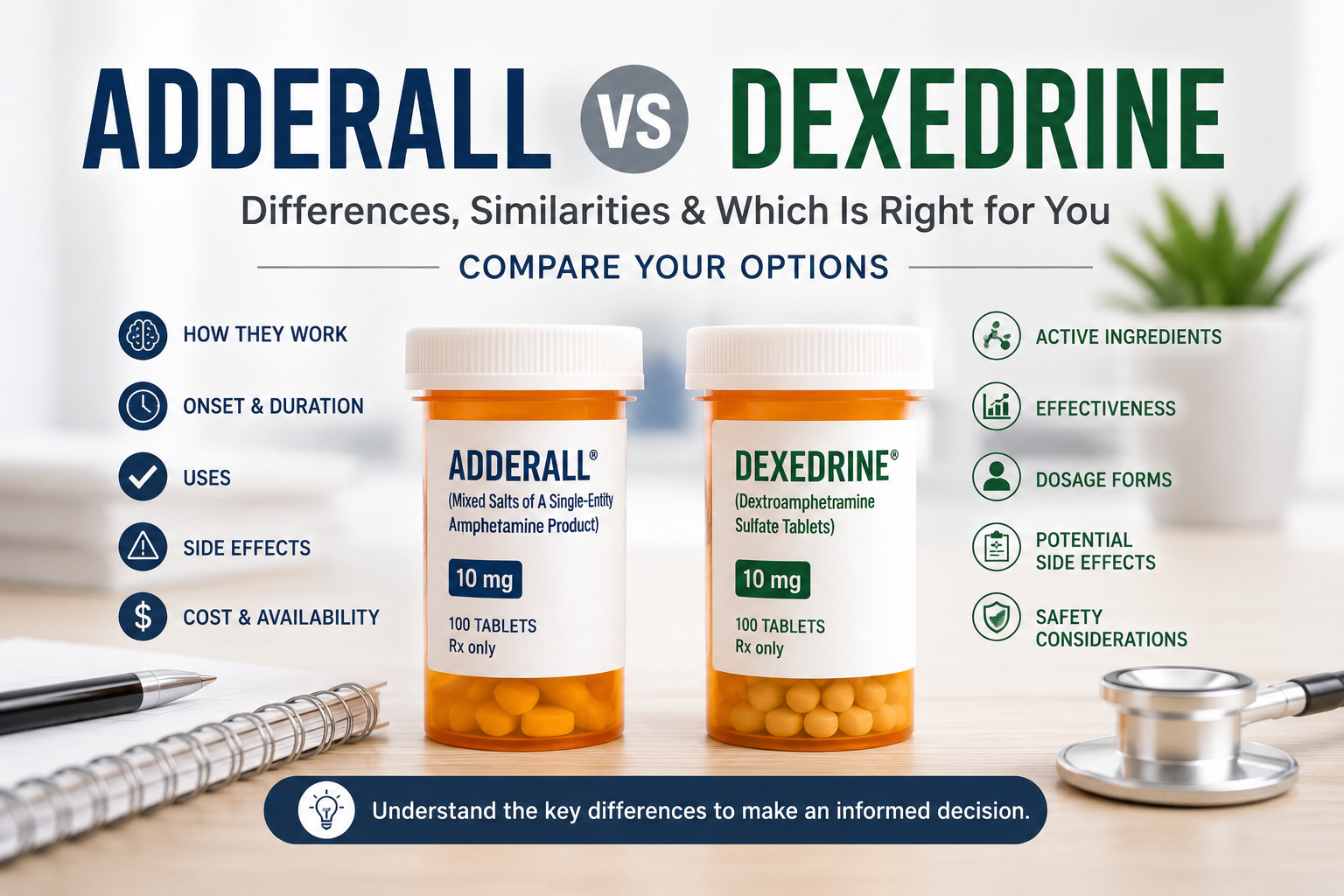
When shoppers search adderall vs dexedrine differences, they usually want a fast answer before comparing options, prices, and availability. Both medications are used for ADHD, and both are stimulant medicines, but they are not identical products. The biggest differences come down to what they contain, how long they last, which versions are available, and how some people respond to each one.
If you are comparing products online, it helps to know what separates them before you decide what to look for. A simple name match is not enough. Two ADHD medications can sit in the same category and still feel quite different in day-to-day use.
What Adderall and Dexedrine are
Adderall is a mixed amphetamine salts medication. That means it contains more than one amphetamine salt in its formula. Dexedrine contains dextroamphetamine, which is a more specific single active stimulant ingredient. That formula difference is the starting point for most comparisons.
For many buyers, this matters because the ingredient profile can affect how the medication feels, how long it lasts, and what options are available in the store. Even when two products are both prescribed for ADHD, shoppers often compare them the same way they would compare other products in an online pharmacy catalog – by formula, strength, release type, and expected use.
Adderall vs Dexedrine differences in ingredients
The clearest distinction is in the active ingredients. Adderall combines amphetamine and dextroamphetamine salts. Dexedrine uses dextroamphetamine only. That sounds like a small detail, but it is the core reason the two medications are considered different products rather than interchangeable labels.
Some people are looking for a broader mixed-amphetamine option, while others prefer a product built around dextroamphetamine alone. In real-world shopping terms, this is similar to comparing two products in the same treatment category that share the same purpose but are made with different active formulas.
This is also why product pages, dosage labels, and strength selections should always be reviewed carefully. The brand name alone does not tell the full story. Ingredient composition matters.
Duration and release options
Another major comparison point is how long each medication may last. Adderall is commonly available in immediate-release and extended-release forms. Dexedrine is also available in immediate-release and sustained-release forms, though product availability can vary by source and stock.
Immediate-release versions are usually taken more than once per day, while longer-acting options are designed to cover more hours with fewer doses. For shoppers balancing work schedules, school demands, or routine planning, this can be a deciding factor. Some people want shorter coverage and more flexibility. Others want a longer-lasting option that reduces the need for repeat dosing during the day.
This is where convenience becomes part of the comparison. A product that fits your schedule better may matter just as much as the active ingredient itself.
How they may feel different
Even though both medications are stimulants used for similar purposes, individual response can vary. Some users report that one feels smoother, stronger, faster, or more focused than the other. Others notice very little difference. There is no universal answer because body chemistry, dose, timing, tolerance, and sensitivity all play a role.
This is one of the most common points of confusion for shoppers. They expect two ADHD stimulants to deliver the exact same experience. In practice, that is not always what happens. A mixed amphetamine product and a dextroamphetamine-only product may produce noticeably different results for some people.
That does not automatically make one better. It simply means the better fit can depend on personal response, product form, and how the medication works within a daily routine.
Side effects shoppers often compare
Adderall and Dexedrine share many of the same possible side effects because they are both stimulant medications. Common concerns often include reduced appetite, trouble sleeping, dry mouth, nervousness, increased heart rate, and stomach upset. Some users also compare crash effects, jitteriness, or how sharply the medication seems to wear off.
What matters here is not just the list of side effects, but the intensity and timing. One person may tolerate Adderall well but find Dexedrine too sharp. Another may have the opposite experience. Release type can also affect the comparison. A short-acting tablet may feel different from an extended or sustained version even within the same product family.
For online buyers, this is why it makes sense to compare more than just price. Product format, strength, and duration can all affect the experience.
Strengths and dosage forms
Adderall and Dexedrine are sold in different strengths and forms depending on the product version. Shoppers often see tablets, capsules, and various milligram options. This matters because availability is not always identical across brands and formulations.
If you are browsing a broad catalog, one medication may have more visible strength choices or a format that better matches your preference. Some buyers prefer tablets for simpler dose control. Others want extended-release capsules for a longer coverage window. The practical difference is simple: the best product on paper is not always the best fit in the cart if the format does not match what you are looking for.
This is also where stock and selection matter. A wider catalog makes comparison easier because you can review options side by side instead of settling for whatever appears first.
Price and buying considerations
For many online shoppers, price is part of the decision from the start. If two medications are in the same general ADHD category, buyers naturally compare affordability, pack size, strength options, and shipping convenience. That does not mean lower cost should be the only factor, but it is often part of the short list.
Adderall and Dexedrine pricing may differ based on dosage form, brand recognition, strength, and current availability. A shopper may choose one because it fits their budget better, because it comes in a preferred strength, or because it is easier to reorder consistently.
This is where a storefront-style pharmacy experience helps. Instead of hunting across multiple sellers, many buyers prefer one place where they can compare categories, check availability, review product options, and move quickly through checkout. On Rx-pills.net, that kind of convenience is part of the appeal for customers who want straightforward browsing, product variety, and discreet delivery.
Which one do shoppers usually choose?
There is no single winner in the Adderall versus Dexedrine comparison. Some shoppers start with ingredient preference. Others start with duration. Many start with what is available at the right strength and price.
Adderall often gets attention because of its broad recognition and mixed amphetamine formula. Dexedrine appeals to buyers specifically looking for dextroamphetamine. If someone has used one before and had a good experience, repeat ordering usually follows familiarity. If they are still comparing, the choice often comes down to four things: formula, release type, response, and convenience.
That is the practical way to look at it. Not as a debate over which product is universally better, but as a side-by-side comparison of what matters most to the buyer.
What to check before you buy
Before adding either product to your cart, review the active ingredient, dosage strength, release type, quantity, and stock status. Those details shape the actual product experience more than the brand name alone. A fast purchase is useful only when the item in the cart matches what you intended to buy.
It also helps to think about timing. If you want coverage across a workday, a longer-acting version may be more appealing. If flexibility matters more, an immediate-release option may be the better comparison point. Buyers who focus only on the medication name sometimes miss the format difference, and that is where confusion starts.
The smartest comparison is always product to product, not just name to name.
The bottom line on Adderall vs Dexedrine differences
If you want the shortest version, here it is: Adderall contains mixed amphetamine salts, while Dexedrine contains dextroamphetamine. From there, the real differences show up in release options, how long they may last, how individuals respond, and which strengths or forms are available when you shop.
For buyers who want convenience, privacy, and direct access to ADHD medications online, understanding those differences makes the shopping process faster and more accurate. Compare the formula first, then the format, then the price. That is usually the quickest way to narrow down the right option for your needs.
